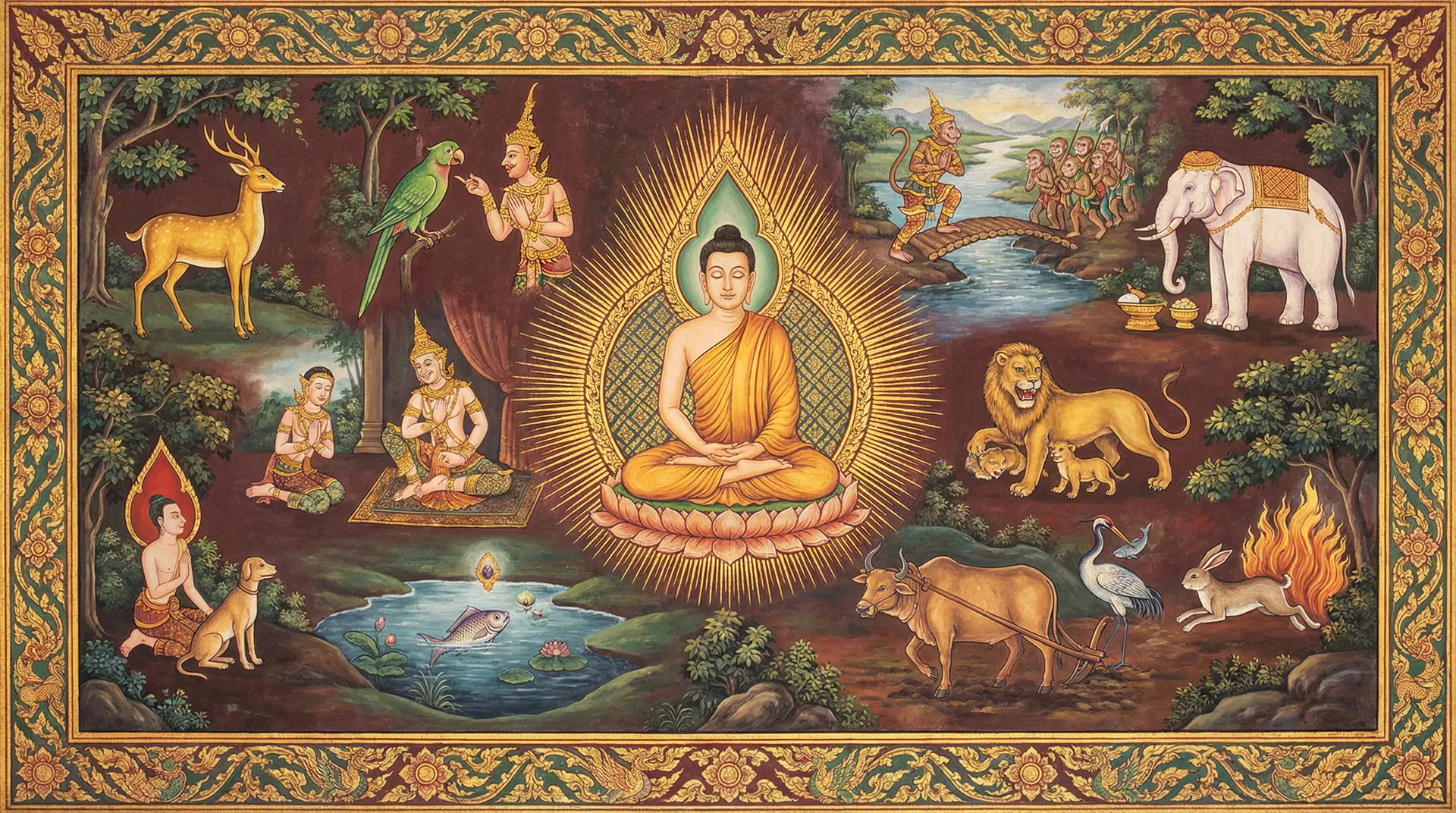
Mahapaduma Jataka
Mahapaduma Jataka
In the realm of Kosala, there once resided a king named Brahmadatta, a ruler known for his righteousness and his deep affection for his subjects. His queen, a woman of unparalleled beauty and virtue, was named Padumavati. Their love for each other was the talk of the kingdom, a pure and unwavering flame that illuminated their lives and inspired their people.
One day, while walking in the royal gardens, Queen Padumavati stumbled upon a magnificent lotus flower, its petals a vibrant crimson, its fragrance filling the air. It was the most beautiful lotus she had ever seen. As she gazed upon it, a profound sense of peace and joy washed over her. She felt an immediate connection to this exquisite bloom, and in her heart, she vowed to protect it and cherish it above all else.
King Brahmadatta, noticing his queen's enchantment with the lotus, ordered that the flower be carefully transplanted into a special pond within the palace grounds, where it could be nurtured and admired. He also decreed that no one was to harm the lotus or disturb its serenity. The king and queen often sat by the pond, marveling at the lotus's beauty, finding solace and inspiration in its presence.
However, as time passed, a dark shadow fell upon the kingdom. A neighboring king, driven by envy and a lust for power, plotted to conquer Kosala. He sent spies to gather intelligence, and one of them, a cunning and deceitful man, learned of the queen's deep affection for the lotus. The enemy king, a man devoid of compassion and morality, devised a wicked plan.
He sent his own emissaries to King Brahmadatta, bearing false gifts and feigning friendship. But hidden amongst the gifts were poisoned needles. The emissaries, under the guise of presenting royal tokens, managed to prick Queen Padumavati with one of these poisoned needles. The queen, though in pain, did not immediately realize the severity of the attack. The poison, however, was potent and insidious.
Within days, Queen Padumavati fell gravely ill. The royal physicians were baffled by her condition, their remedies proving useless against the unseen venom. King Brahmadatta was beside himself with grief and fear. As the queen weakened, she confessed to the king the attack with the poisoned needle and her suspicion that it was a foreign plot.
The king, enraged by this betrayal and the suffering of his beloved queen, vowed to find the perpetrators and bring them to justice. He ordered his men to investigate, but the enemy spies had vanished, leaving no trace. The king's sorrow deepened, knowing the queen's life was ebbing away.
In her final moments, Queen Padumavati, her voice faint but clear, spoke to the king. "My dearest king," she whispered, "do not let grief consume you. My life is tied to the lotus. If the lotus wilts, so shall I." She then asked him to bring the magnificent lotus flower to her bedside.
King Brahmadatta, desperate to fulfill his queen's last wish, had the lotus carefully brought to her. As the queen gazed upon the vibrant bloom, a faint smile touched her lips. She held it gently, her connection to it palpable. But as the queen's life force faded, so too did the brilliance of the lotus. Its petals began to droop, its vibrant color turning dull, its fragrance vanishing.
The king watched in agony as both his queen and the flower withered away. When Queen Padumavati finally breathed her last, the lotus flower collapsed, its life extinguished. The king's heart shattered. He had lost his beloved queen, and the symbol of their love and his kingdom's peace was gone.
Overcome with sorrow and a burning desire for vengeance, King Brahmadatta gathered his armies and marched towards the neighboring kingdom. He was determined to avenge his queen and the destruction of the sacred lotus. The ensuing battle was fierce and bloody. King Brahmadatta, fueled by his grief and righteous anger, fought with unparalleled ferocity.
In the end, King Brahmadatta emerged victorious. He defeated the treacherous neighboring king and brought an end to his wicked reign. However, the victory brought little solace. The loss of his queen and the symbolic lotus had left an indelible scar on his heart. He returned to Kosala, ruling with justice but forever bearing the weight of his profound loss.
The Mahapaduma Jataka serves as a poignant reminder of the profound bonds of love and the devastating consequences of malice and deceit. It speaks to the interconnectedness of life and the symbols we hold dear, and how acts of betrayal can lead to widespread sorrow and destruction.
— In-Article Ad —
💡Moral of the Story
The purity of love and the sanctity of life are precious. Malice, envy, and deceit lead to destruction and suffering for all involved. True victory can be hollow if it is born from great personal loss.
Perfection: Truthfulness (Sacca) and Love (Metta)
— Ad Space (728x90) —
More Jataka Tales You May Enjoy
 471Dvādasanipāta
Mahājanaka Jātaka
The Tale of King MahājanakaIn the ancient kingdom of Mithilā, a prosperous land graced by gentle bre...
💡 Even in the face of overwhelming adversity, unwavering perseverance and courage can lead to ultimate success. Never give up hope, for even in the darkest of times, a glimmer of light can appear.
 500Pakiṇṇakanipāta
Mahā-sutasoma Jātaka
Mahā-sutasoma JātakaIn the ancient city of Indapatta, ruled the wise and virtuous King Pāṇḍava. He w...
💡 True victory is achieved not through violence, but through wisdom, compassion, and understanding, which can transform even the most destructive forces.
 427Navakanipāta
Sakuna Jataka
The Tale of the Virtuous Bird In the heart of a dense forest, where ancient trees reached for the sk...
💡 Compassion, selflessness, and the accumulation of spiritual merit have the power to overcome great adversity and benefit all beings. In times of crisis, unity and shared good deeds are far more powerful than anger and division.
 64Ekanipāta
The Bodhisatta's Compassion in Times of Famine
The Bodhisatta's Compassion in Times of Famine In the ancient kingdom of Benares, a time of unprece...
💡 Keeping one's promises is extremely important. Breaking a vow will lead to bad karma.
147EkanipātaSutasoma Jataka
Sutasoma JatakaIn the ancient kingdom of Kampila, nestled amidst verdant plains and gurgling rivers,...
💡 True victory is achieved not by defeating an enemy through violence, but by transforming them through compassion, understanding, and the power of righteous living.
144EkanipātaMaca Hamsa Jataka
The Tale of the Golden Swan King In the realm of the Himalayas, amidst snow-capped peaks and crystal...
💡 True wealth lies in inner virtue, wisdom, and compassion, not in material possessions which are transient.
— Multiplex Ad —